How to Organize Your Finances as a New Retiree If you’ve finally reached retirement, congratulations! This is yet another chapter in life you must learn to navigate, as you’ll suddenly have much more time to spend with your personal interests. This could mean you dive deep into a hobby, plan to travel more or find a new part-time job to stay active. Whatever your path may be, you’ll want to make sure you keep your finances organized during your retirement years to remain comfortable and continue pursuing your goals. Read more
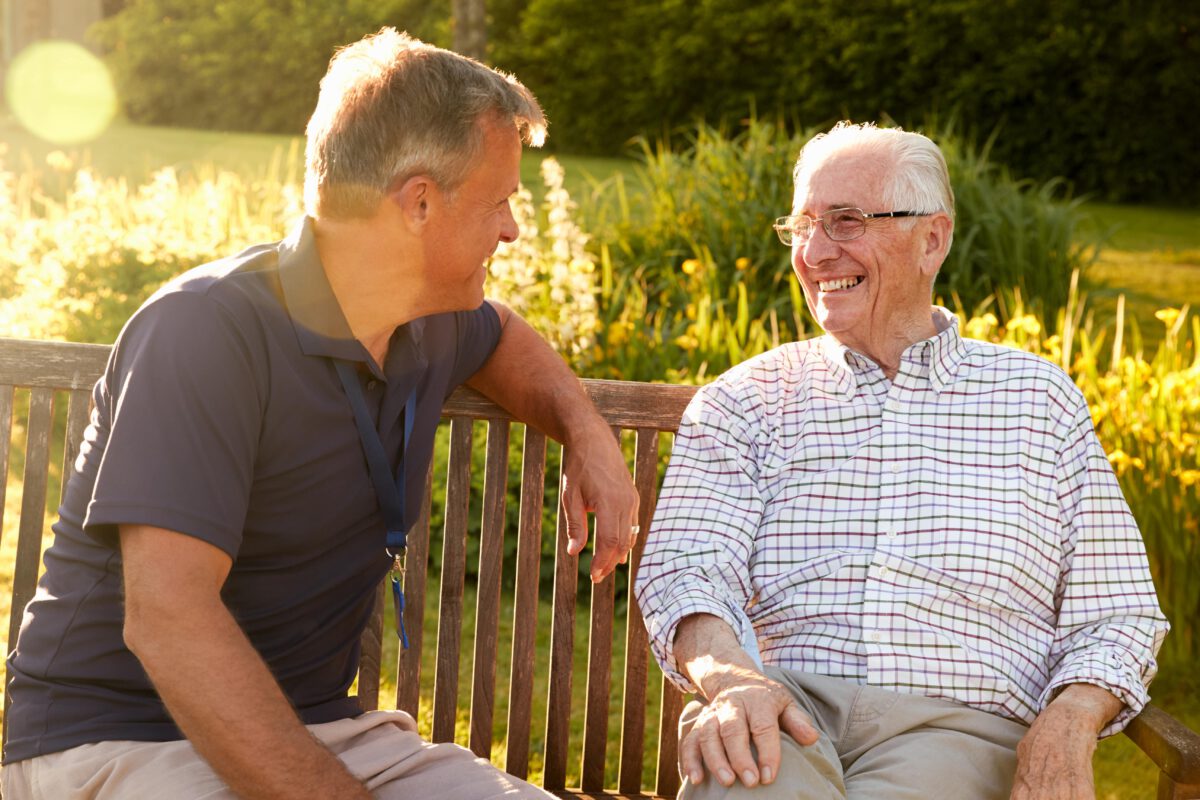
Secondary Caregiving: Providing Care to a Loved One in Assisted Living When we transition a loved one to an assisted living facility, it may feel as if our role as a caregiver has ended. However, most caregivers who move a loved one into assisted living instead experience a change in their caregiving role rather than an end to this role entirely. With this change can come new responsibilities and sources of stress. Read more
Perspectives on facility dogs from pediatric hospital personnel: A qualitative content analysis of patient, family, and staff outcomes An increasing number of children's hospitals feature full-time resident facility dogs, which are specially trained to work alongside pediatric healthcare professionals to improve the patient experience. This qualitative study aimed to describe the role that facility dogs play in the lives of patients, families, and hospital staff. A total of N = 73 pediatric healthcare professionals that worked with 46 facility dogs across 17 children's hospitals in the US completed a set of open-ended questions in an online survey. Responses were analyzed via a conventional thematic analysis and organized into themes and sub-themes. Facility dogs were described to benefit pediatric healthcare professionals' daily lives through improving stress and wellbeing, staff relationships, and job-related morale. Negative impacts included increased burdens and responsibilities in the workplace. Facility dogs were also described to benefit patients and families by helping build rapport, providing a comforting presence and positive resource, and normalizing the hospital environment. In conclusion, facility dog programs were found to be a promising complementary intervention to benefit both staff as well as and patients and families. Future research is warranted to examine short-term and long-term implications of facility dog programs for staff, patient, and family wellbeing. Read more
Maximizing the Environment for Individuals with Dementia According to the AARP, most Americans would prefer to stay in their homes until the end of their life. This statistic is no different for persons with dementia. Lack of safety and accessibility in the home are issues that need to be addressed so that individuals with dementia and their respective caregivers also have the ability to age in place. Occupational therapy professionals are trained health care providers that can provide formalized home safety assessments and recommend home modifications to increase safety and independence in the home. These efforts are also beneficial for community and business owners to consider and employ to further support individuals with dementia in the community. Read more
Making the Transition to Long Term Care a Successful Choice Have you made the decision to transition your loved one to long-term care? This can change your role as a caregiver and return your relationship with your loved one to one that is more personal and familial. How can you make this a decision that both incorporates your loved one’s preferences and supports their personal values? This webinar will discuss important topics for this transition, including the assessment process, how to communicate with long-term care facilities and care planning. Read more
Evaluating nursing home resident and staff experiences with a life story program Life story programs hold promise for improving person-centered care and relationships between nursing home residents and staff. A pilot life story intervention study in 16 nursing homes provided residents with complimentary biographical life story books and summaries, and staff with action plans to enhance care planning. Trained volunteers and program staff collected life stories, and researchers interviewed 170 residents at three points in time. Overall, residents had positive experiences with the program, but were less willing to share their books with others afterwards. They also experienced a decrease in depression (Patient Health Questionnaire-8 [PHQ-8]) over time. Surveys of 92 staff demonstrated increases over time in perceived importance of knowing residents’ life stories. Administrator/admissions staff found it conditionally feasible to incorporate the program into admission processes. Practice implications of life story work include opportunities to help staff learn more about residents they care for, improve person-centered care, and honor resident preferences in care planning. Read more
Aging in Place What’s the best way to successfully age in place? This webinar will review our newest homeownership workshop: “Aging in Place: Know Your Housing Options.” We’ll discuss how you can assess your loved one’s home for safety, accessibility and affordability; how your loved one can use their home equity to keep their home; ways to explore the many housing options available to your loved one; additional benefits; and legal and tax issues. We’ll also share an overview of Ohio’s first nonprofit real estate agency, and the many services offered to help both first time homebuyers purchase their first home and older adults transition out of their last homes. Read more
The effects of facility dogs on burnout, job‐related well‐being, and mental health in pediatric hospital professionals The study aimed to examine the effect of working with a facility dog on pediatric healthcare professionals’ work‐related burnout, job perceptions, and mental health. Findings suggest that facility dogs may be related to several benefits for healthcare professionals’ work‐related burnout, job perceptions, and mental health, but that they do not influence all components of these areas. Read more
Preparing Your Home for Hospice If the loved one we care for is in the advanced stages of a disease and we’ve decided that we would like them to be in as much comfort as possible in familiar surroundings, home hospice may be the right choice. However, arranging a loved one’s home or our own for a hospice stay takes some thought and preparation. We likely don’t want the place to look like a hospital, but we need to have all of the necessary equipment the loved one we care for requires. Read more
Bathroom Safety for a Loved One with Late Stage Dementia These days, about 80 percent of people with Alzheimer’s disease and related dementias (ADRD) stay in their own homes with the support of family and friend caregivers rather than move to long-term care facilities. While aging in place can provide a loved one with a familiar, comforting space, it can also lead to challenges related to the safety of the home environment. Things around the house like stairwells, area rugs, medicine cabinets and knife blocks that were once a normal part of a loved one’s living space may now present new dangers with ADRD. Read more