

The Stories We Carry: How LifeBio Is Helping Bring the Person Back Into Care
When Beth Sanders thinks about the origins of LifeBio, she goes back to a conversation with her grandmother.
After earning degrees in English and journalism, Sanders returned to her hometown of Erie, Pennsylvania, where her grandmother was experiencing some memory challenges. Sanders decided to record her grandmother telling her life story.
Like many people, she thought she already had a clear picture of her grandmother and what her life was like. But the experience taught her otherwise.
“I thought I knew my grandmother, but I did not, because I never asked her the right questions,” Sanders said.
She asked about her grandmother’s childhood, her hometown and the one-room schoolhouse where she had taught. Those conversations revealed pieces of her grandmother’s life that Sanders had never known.
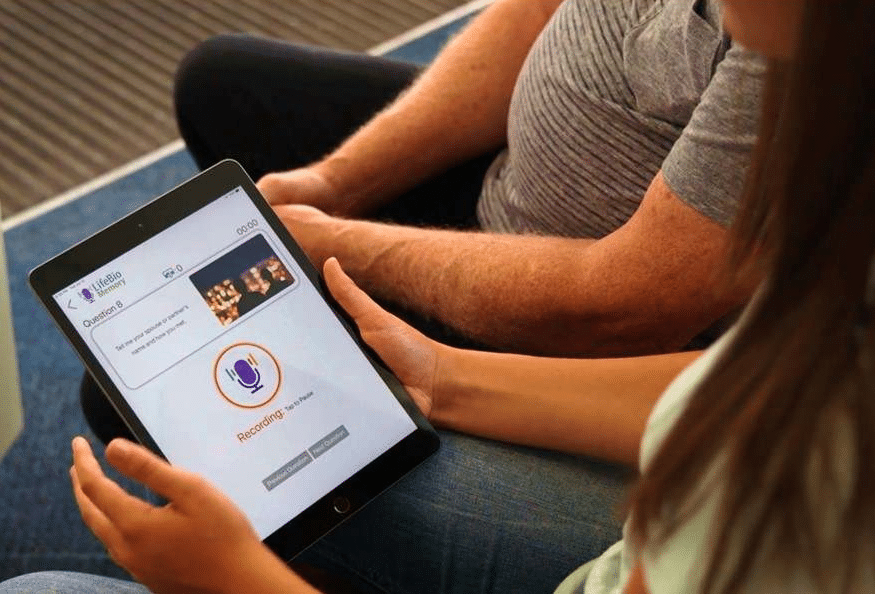
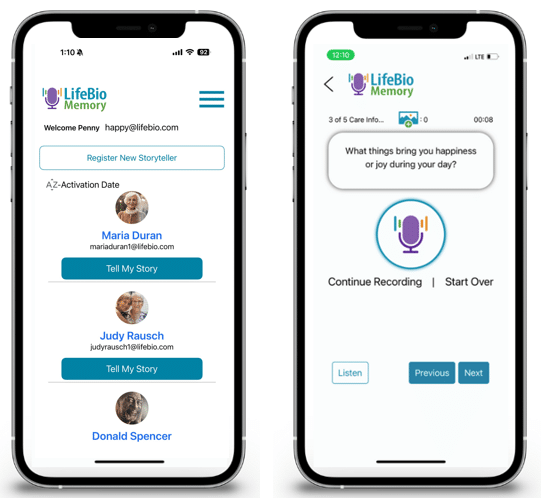
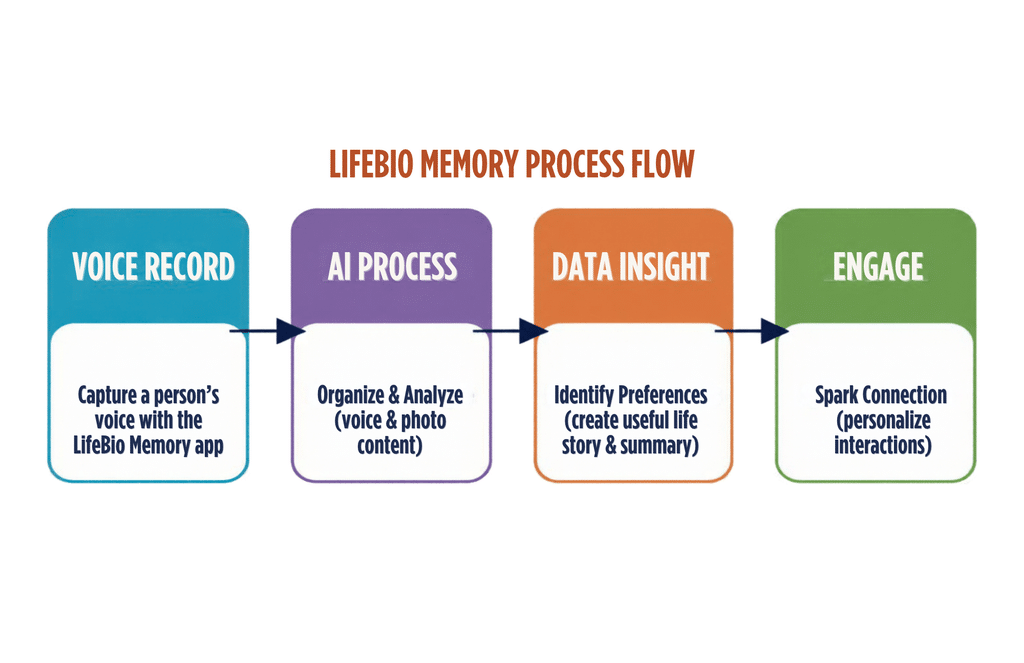
The experience became the inspiration for LifeBio, a technology company focused on capturing and preserving older adults’ life stories and making those stories useful in care.
For Sanders, the idea of recording family histories goes back even further. As a child, she once interviewed an older relative using a tape recorder. Years later, when interviewing her grandmother, she discovered that a family member had preserved an oral history of her own great-great-great-great-grandmother.
“It runs in the family,” Sanders said.
More than memories
Life story work can be about preserving family history, but Sanders believes its value goes beyond creating a record of the past. She has found that older adults often have a strong desire to share what they have learned throughout their lives.
“I think that they need purpose and meaning,” she said. “I think that they really need to share. They love to teach and inform.”
Reminiscing gives people an opportunity to pass knowledge and experiences on to caregivers, family members and friends. It can also give people space to reflect on the difficult parts of their lives alongside the joyful ones.
“There’s so much joy, so much pain, so much to share by the time you’re 80,” Sanders said.
She recalled one woman whose life had included both significant losses and many meaningful relationships. After reflecting on her experiences, the woman said, “I’m reminded of all the love I’ve experienced in my life.”
For Sanders, that is part of what makes life story work so powerful.
“There’s suffering and there’s sweetness in life,” she said.
Opening the door to a lifetime of stories
People who are new to life story work are sometimes hesitant to participate. Sanders said she frequently hears people say they have nothing to share, that nobody would care about their stories or that their family already knows everything about them.
But a simple question can change that. Ask someone to describe their hometown, for example, and suddenly the memories begin to unfold: the place where they used to get ice cream, Saturday night movies, familiar routines and the rhythm of everyday life.
“It’s like the door is opened, and everything just kind of floods back,” Sanders said.
One question can lead to another, and a story that someone expected to tell in a few minutes can stretch much longer.
“Sometimes it’s like, oh my goodness, 20 minutes goes by in that one question because one thing led to another that led to another,” she said.
Seeing the person behind the diagnosis
That process can be particularly meaningful for people living with dementia. Though there is sometimes an assumption that people with dementia cannot participate meaningfully in life story work, long-term memories may remain accessible even as other aspects of memory become more difficult.
“They may not have all the facts straight, but the emotions of that life event or that wedding day will take over,” she said.
A person might not remember the exact date of a wedding, for example, but may vividly recall the heat of the day, the feel of a scratchy suit or the beauty of their spouse-to-be.
Those details can provide a glimpse into the person beyond their diagnosis. Sanders believes that understanding someone’s history can also change the way caregivers interact with them.
“I think that it can increase the level of compassion for that person,” she said. “I think that they can probably be more kind and patient with them if they realize what this person has been through and they can relate better.”
She offered the example of someone who worked the third shift for decades. Without knowing that history, a caregiver might not understand why the person wants to stay awake at night and sleep during the day. With that context, the behavior suddenly makes sense.
Life story information can help caregivers understand not just what someone is doing, but why.
Giving people with dementia a chance to tell their stories
Sanders also hopes caregivers will resist the temptation to assume that someone living with dementia cannot participate.
“Give them a shot. Give it a chance,” she said.
The goal, she explained, is not necessarily to test whether someone can provide every factual detail correctly. Instead, it is about giving them an opportunity to express memories, emotions and experiences.
“All the senses that come out of telling the story is well worth it,” Sanders said.
And sometimes, the most meaningful part is simply hearing the person’s voice.
“I love it when the audio recording is complete,” she said. “For the caregiver, they now have their mom’s voice, their uncle’s voice, their grandpa’s voice. That’s what people want to have and come back to, years down the road.”
Researching the impact of life stories
Benjamin Rose Institute on Aging has worked with LifeBio on multiple research projects examining how the technology can be used in care settings. That research has helped LifeBio understand both the experiences of people receiving care and the staff members providing it.
The partnership has also influenced the development of LifeBio’s technology and training. Earlier focus groups involving people living with dementia and care staff led to improvements in the platform’s user interface, implementation procedures and training materials.
For Sanders, that research is important because it moves life story work beyond a compelling idea and toward an evidence-informed approach.
“We found that we were moving the needle on reducing depressive symptoms for people in nursing homes who had dementia,” she said.
She emphasized the importance of working with researchers who can measure outcomes and determine what is actually happening as a result of an intervention.
“We know how to create the product,” Sanders said. “We don’t know how to [measure] these things. Benjamin Rose provides that expertise for us, and helps make the product a better experience.”
The research also showed Sanders the importance of understanding the experience of both sides of the care relationship.
“If we don’t know what’s happening on both sides of it, it’s incomplete,” she said. “It’s a two-way street.”
Looking toward the future
For Sanders, the future of aging services involves finding more ways to make care personal.
“I think that we do need to have more personalized solutions, and more one-on-one experiences,” she said.
She envisions more opportunities for intergenerational connections and partnerships with places of worship, schools and universities. Technology will also have a role to play, including artificial intelligence and other tools that can help address isolation and create opportunities for people to express themselves.
But Sanders sees technology as a tool for human connection, rather than a replacement for it. It can make it easier for life stories captured, preserved and shared. In a world where someone might otherwise spend hours alone, Sanders sees an opportunity to use technology to make connection easier, rather than make connection unnecessary.
“Our technology is like a bridge,” she said. “It brings people together.”