How Caregivers Can Get Involved in the Community Many times, people think of volunteering or being involved in the community as another activity to add to their to-do list. This can especially be the case when the project we have signed on for is out of our realm of interest. Caregivers can also often feel they do not have enough time to engage in activities they enjoy. However, finding the perfectly tailored volunteer opportunity or community engagement program can be key to gratification in our personal lives. Read more
Encouraging an Older Loved One to Get Tested for Dementia Cathy Franz, LSW, a Care Consultant with Benjamin Rose Institute on Aging’s WeCare…Because You Do, discusses tips on how to encourage older loved ones with symptoms of memory loss to visit a doctor to get tested for dementia. Read more
Caregiving for Older Male Loved Ones Every caregiving journey is unique, and there are so many factors that can change the experience. Your loved one’s family history, age, diet and ethnicity are all things that can affect his or her wellness, while their temperament, ability to communicate, values and beliefs can all impact the smoothness of providing care. Biological sex can also play a role. Those who care for the important men in their lives—fathers, spouses, partners, brothers, uncles, grandfathers, and many more—may experience different challenges than those caring for women. Read more
Keeping Your Older Loved One Safe from Grandparent Scams It’s an old stereotype that grandparents will do almost anything for their grandchildren—including opening their wallets more often than they probably should. If they hear their grandchild is experiencing a crisis, their first response is likely to do whatever they can to help them. Unfortunately, fraudsters are taking advantage of this natural impulse to help with a type of scheme known as a “grandparent scam.” Read more
Perceived Unmet Need and Need-Related Distress of People Living with Dementia The unmet needs of people living with dementia have been shown to be multidimensional and impact well-being. However, there are a lack of studies examining variability of unmet needs and need-related distress from the person living with dementia’s perspective. The current study (n = 12) examined the self-reported unmet needs and need-related distress of people with mild to moderate dementia. Seventy-five percent of participants (n = 9) identified at least one unmet need and 50% (n = 6) reported 10 or more unmet needs. “Finding and Arranging Services” and “Health Information” subscales had the highest reported average unmet needs. The most frequently reported unmet need-item was “getting information about your memory problems?” Participants reported variability in distress for both unmet and met needs. Continued research can provide beneficial information on the relationship between unmet needs, need-related distress, and outcomes of well-being for future interventions. Read more
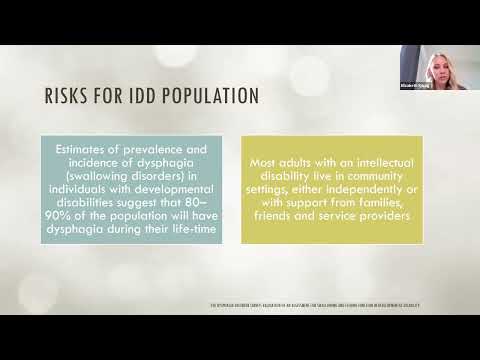
Making the Most of Mealtime: Eating, Swallowing & Dignified Dining for Individuals with Dementia & IDD Eating and food are at the center of many of life’s occasions, celebrations and moments together with loved ones. Of course, eating is also a necessity—we rely on nutrition and hydration to survive. But what happens to these important and essential moments when dementia affects a loved one’s eating? In what ways can a loved one’s ability to interact with food begin to change? This webinar explains some of the changes that may make mealtime challenging when caring for someone with dementia, and provides tips on how to set up the eating environment for successful mealtimes. It also focuses on swallowing disorders for individuals with dementia and intellectual and developmental disabilities, and how to balance safety concerns while ensuring a dignified dining experience. Read more
What to Know as a Caregiver Before a Loved One’s Hospital Visit As caregivers, we may encounter sudden changes in a loved one’s health or behavior due to a chronic illness or accident, like a fall. This can be especially worrisome if these changes occur in the middle of the night. We want to get them the help they need as soon as we can, but the first challenge may be trying to decide what is the appropriate place to receive care. Read more
What to Know About Recent Government Policies to Support People with Dementia and their Caregivers The Untied States government has always been a key player in the fight against dementia, but recently it has made an even greater national commitment to address this serious threat to national health. We outline just three recent dementia-related public policies that older adults with dementia and their caregivers should know. Read more
Helping Older Loved Ones Face Changes in Mental Health For older adults, mental illness is a conversation made difficult by stereotypes. Assumptions like “Old people are just stubborn” or “He’s become mean as he’s aged” cause many to dismiss mental illness in older adults. For caregivers, messages like these can make it difficult to differentiate mental illness from what are considered “normal parts of aging.” Read more
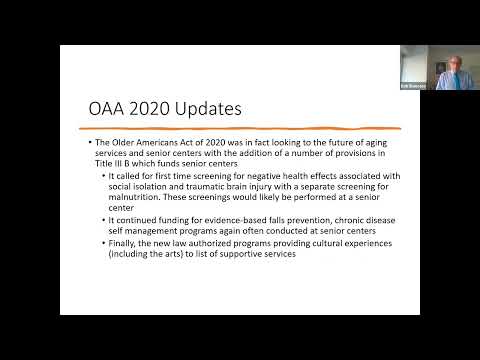
Senior Center Policy: Challenges and Recommendations This is an up-to-date virtual discussion on senior center policy and serving older adults in our communities, presented in partnership with the Elder Justice Coalition. We provide an overview of challenges, strategies and recommendations on key issues faced by older adults who utilize senior center services. Read more