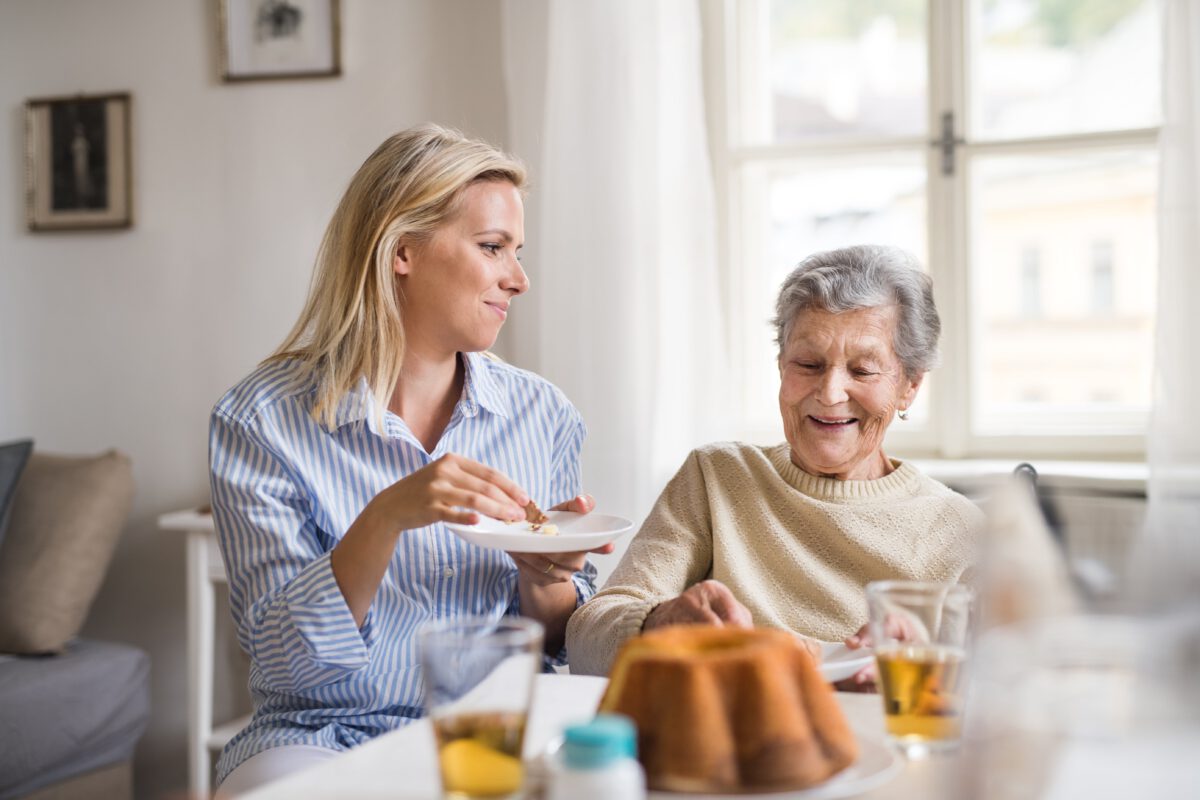
How to Hold Family Meetings to Discuss an Older Loved One’s Care Family meetings can be a valuable tool. Each person can express their thoughts and concerns at the same time. Everyone will hear the same message and come together to support their parent and each other. This will help to reduce misinformation, and make it easier to develop a plan and next steps. Read more
Managing a Loved One with Dementia’s Sensory Challenges Dementia can change a loved one’s ability to experience these five senses, and that can have a huge impact on how they view the world. Their favorite food might not taste the same way. They may be startled by the sound of laughter they used to love. They may draw away from a once familiar touch. As a caregiver, it’s important to recognize these changes, and to help make your loved one’s world a more comfortable, less overwhelming place to be for each of their five senses. Read more
Behavioral Interventions: When Caring for Someone with Dementia Behavioral Interventions: When Caring for Someone with Dementia incorporates the most current research about dementia care, effective practical strategies, and useful resources in identifying causes of common behavioral symptoms and effective interventions. Read more
Your Loved One Receives a Dementia Diagnosis: Now What? You’ve worried, wondered, and second-guessed. You may be scared and nervous. Now you find yourself in the doctor’s office with your loved one. Following multiple assessments and a battery of tests, all things point to a diagnosis of dementia. Your emotions race everywhere. At first, you may be shocked or frightened – and maybe even a little relieved to have answers or explanations. Ultimately, even though you admit to having seen signs and symptoms for some time, the official diagnosis can leave you feeling unprepared and confused about what to do next. Read more
Advocating as a Caregiver for the Creation of Age-Friendly Communities Creating age-friendly communities can be beneficial to the well-being of not only older adults, but also those who care for them, regardless of age. These communities can provide older adults with the means to age in place with the support of family and friend caregivers. As we care for loved ones, we can also be part of the movement to promote age-friendly communities and advocate for change. Read more
Preparing for Your Future After an Early Onset Dementia Diagnosis A diagnosis of dementia can be devastating no matter your age. However, older adults, especially those over the age of 65, tend to be more aware of the possibility of dementia, and know that their risk statistically increases each year. But for younger adults, being diagnosed with dementia between the ages of 30 and 60 is not only upsetting—it can be outright shocking. Read more
Elder maltreatment: An international perspective Elder maltreatment is a global public health crisis. This chapter provides an overview of maltreatment which includes abuse, neglect, and exploitation. It describes cultural components of maltreatment and the consequences it can have on victims. It draws on generic definitions of maltreatment that can be used cross-culturally, provides examples, and signs of specific types of maltreatment, and addresses both maltreatment that is perpetrated by others and abuse which is inflicted on oneself. Scams are included as they are increasingly common and can have significant negative effects on the well-being of older adults. Screening tools, trainings, and other resources are described to enhance knowledge and create awareness. The reporting of elder maltreatment is discussed in an American context, as the authors of this chapter are based in the United States. Read more
The Financial Fatigue of Caregiving: When Caring for a Loved One with Dementia This informative webinar is for family and friend caregivers or supporters of persons with dementia. This webinar discusses the effects caregiving has on your finances, and how to effectively manage your finances while balancing multiple responsibilities. We cover how to have difficult conversations about taking on the financial role of caring for a loved one, estate planning and how to make sure your loved ones are protected against financial exploitation. Read more
Taking on Caregiving Responsibilities: Balancing Expectations vs Reality As your loved one ages, you may find that the demands of caregiving are growing, and it can be too much to handle. Whether you’re helping with small tasks or assisting a loved one with bathing, no caregiving task truly feels all that small, but others can certainly feel too overwhelming. Your expectations may be that you can do it all – caregiving on top of managing your own household, job and other responsibilities. Or, it could be that others’ expectations for care are growing and you feel pressured to live up to it. Whichever the case may be, accepting the situation and learning to work with it may be the first step to making life easier down the road. Read more
Secondary Caregiving: Providing Care to a Loved One in Assisted Living When we transition a loved one to an assisted living facility, it may feel as if our role as a caregiver has ended. However, most caregivers who move a loved one into assisted living instead experience a change in their caregiving role rather than an end to this role entirely. With this change can come new responsibilities and sources of stress. Read more